


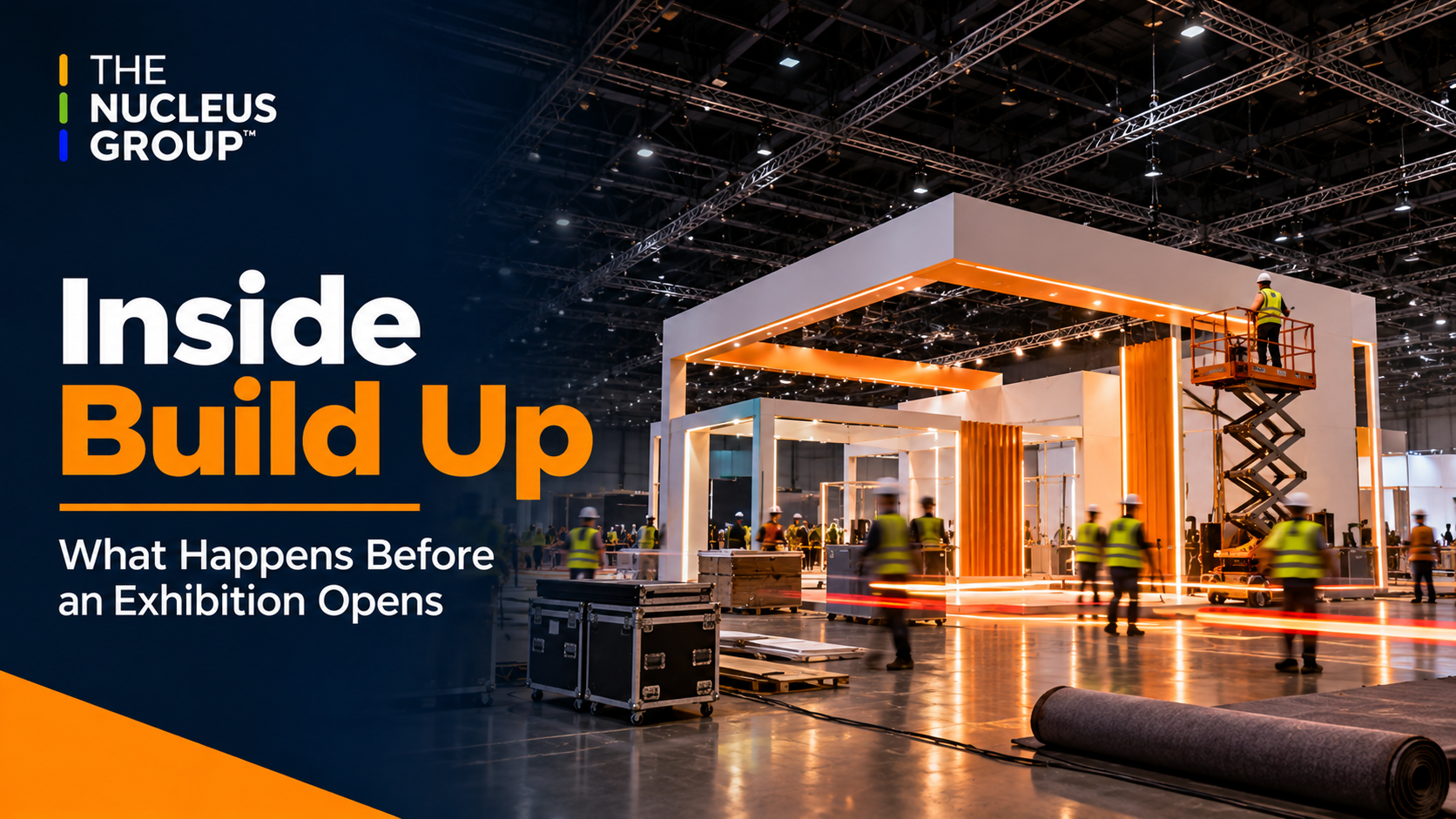
Inside Build Up: What Happens in the Days Before an Exhibition Opens
Inside Build Up: What Happens in the Days Before an Exhibition Opens
Quick Overview: Exhibition Stand Build Up
Here is how a typical custom stand build runs, from empty hall to opening day. Exact dates and times are set by each show's organiser.
Weeks Before: The Build Starts in the Workshop
The biggest secret of build up is that most of the stand is already built before it reaches the hall. A custom stand is fabricated in the builder's workshop, where joinery is cut, painted and finished, steel frames are welded and graphics are printed.
Many builders then test fit key sections of the stand in the workshop, putting them together exactly as they will stand in the hall. Problems found here take minutes to fix. The same problems found at midnight in an exhibition hall can take hours. Once everything is checked, each piece is labelled, packed and loaded in the order it will be needed on site.
Day One: An Empty Hall Comes Alive
Morning: marking the floor
When the hall opens to builders, the first job is marking out. Using the floor plan, the team chalks or tapes the exact footprint of the stand so every wall lands in the right place. A few centimetres out at this stage can mean a wall that does not line up with the neighbouring stand or an aisle that ends up too narrow.
Rigging goes up first
Anything that hangs from the ceiling, such as a hanging sign, truss or lighting rig, usually goes up early, while the floor below is still clear for lifts and access equipment. In most venues this work is done by the venue's own appointed riggers.
Afternoon: the structure rises
Trucks unload in their booked slots and the structure goes up: a raised floor to hide cables and level the surface, then walls, frames and any second level. By the end of day one, a well run stand already looks like its render, even if it is still bare.
Day Two: Power, Light and Graphics
Once the structure stands, the stand starts to become a brand space. Electrical connections are made, lighting is fixed and aimed, and screens and AV systems are mounted and tested. Fabric graphics are fitted into their frames, rigid panels go on, and 3D letters and lightboxes are switched on for the first time.
This is often the day when the build looks messiest, with cables, packaging and tools everywhere. It is also when the most important decisions are checked: does the lighting make the product look right, can the logo be seen from the aisle, and does the meeting room feel private enough?
The Final Night: Dressing, Snagging and Cleaning
The last stretch of build up is about detail. The protective film comes off the carpet, furniture is placed, plants arrive and products are positioned on their displays. The team then walks the stand with a snag list, checking every edge, joint, light and finish.
- Snagging: fixing chipped edges, gaps in panels, loose cables and uneven graphics.
- Testing: running every screen, demo and light as it will run on show day.
- Cleaning: vacuuming, wiping glass and removing every trace of packaging.
- Walkthrough: the exhibitor sees the stand and signs off any final changes.
Stands are often covered in plastic overnight to keep dust off, ready to be unwrapped in the morning.
Opening Morning: The Last Hour
On opening day, the stand team arrives early for final checks. Plastic covers come off, screens are switched on, brochures and giveaways are stocked, and stand staff are briefed on the day's meetings. A good builder keeps a small support team at the show to handle any issue that appears once visitors arrive.
Then the doors open, and the hall that was empty concrete a few days earlier is full of visitors.
What Can Go Wrong During Build Up
Build up runs on tight timing, so small problems can grow quickly. These are the most common, and how experienced builders avoid them.
Most of these are solved long before build up starts. Our exhibition stand planning timeline shows when each step should happen, and our exhibition stand artwork guidelines help artwork arrive on time.
What Exhibitors Should Do During Build Up
- Confirm your on site contact so the builder can reach a decision maker quickly.
- Ship products and stock on time so they arrive before dressing starts.
- Book your walkthrough near the end of build up, when changes are still possible.
- Bring the right access: build up badges and safety shoes are usually required in the hall.
- Leave the build to the builder: changes to the design at this stage cost the most time.
New to the terms used on site? Our exhibition stand glossary explains rigging, fascia, raised floors and more.
After the Show: Breakdown
When the show closes, the process runs in reverse. Breakdown is usually much faster than build up, often done in a single night. Products and valuable items come off first, then graphics, AV, furniture and finally the structure. Reusable parts are packed for storage, and the hall must be cleared by the venue's deadline.
Why Choose Nucleus for Your Stand Build
|
01 Built and test fitted in house Joinery, steel, graphics and AV are produced by our own teams, so less is left to chance on site. |
02 Experienced on the floor Our installation teams have built at Dubai World Trade Centre, ADNEC and other major venues across the UAE. |
03 From workshop to breakdown One team covers custom stand design and build, installation, show support and dismantling. |
Recent Projects
Plan a Stand That Builds Smoothly
Tell us your show, stand size and dates, and we will plan the design, production and build up so your stand is ready, tested and spotless when the doors open.
Frequently Asked Questions
What is exhibition stand build up?
Build up is the period before a show opens when contractors deliver, assemble and finish every stand in the hall. Each builder works in a time slot set by the organiser, and the stand must be complete, clean and safe before the doors open to visitors.
How long does exhibition stand build up take?
It depends on the stand and the show. A shell scheme is ready when exhibitors arrive, a mid size custom stand often takes one to two days, and large or double deck stands can need three days or more. The organiser sets the exact build up dates in the exhibitor manual.
Why are custom stands built in a workshop first?
Most of a custom stand is made and test fitted in the builder's workshop before it reaches the hall. That way joinery, graphics and lighting are checked in advance, and the time on site is spent assembling rather than making.
Can exhibitors visit the stand during build up?
Usually yes, with the right badge and safety gear, since build up halls are active work sites. Most builders invite the exhibitor for a walkthrough near the end of build up to check details before the show opens.
What happens if a stand is not ready on time?
Organisers expect every stand to be finished before opening, and unfinished work in the aisles can lead to fines or restrictions. That is why experienced builders plan in buffer time, prepare spare parts and keep a team on site until the last detail is done.
Does Nucleus handle build up and breakdown?
Yes. Nucleus manages the full build: workshop fabrication, delivery, installation during build up, support during the show and dismantling at breakdown, with its own teams for joinery, steel, graphics and installation.