

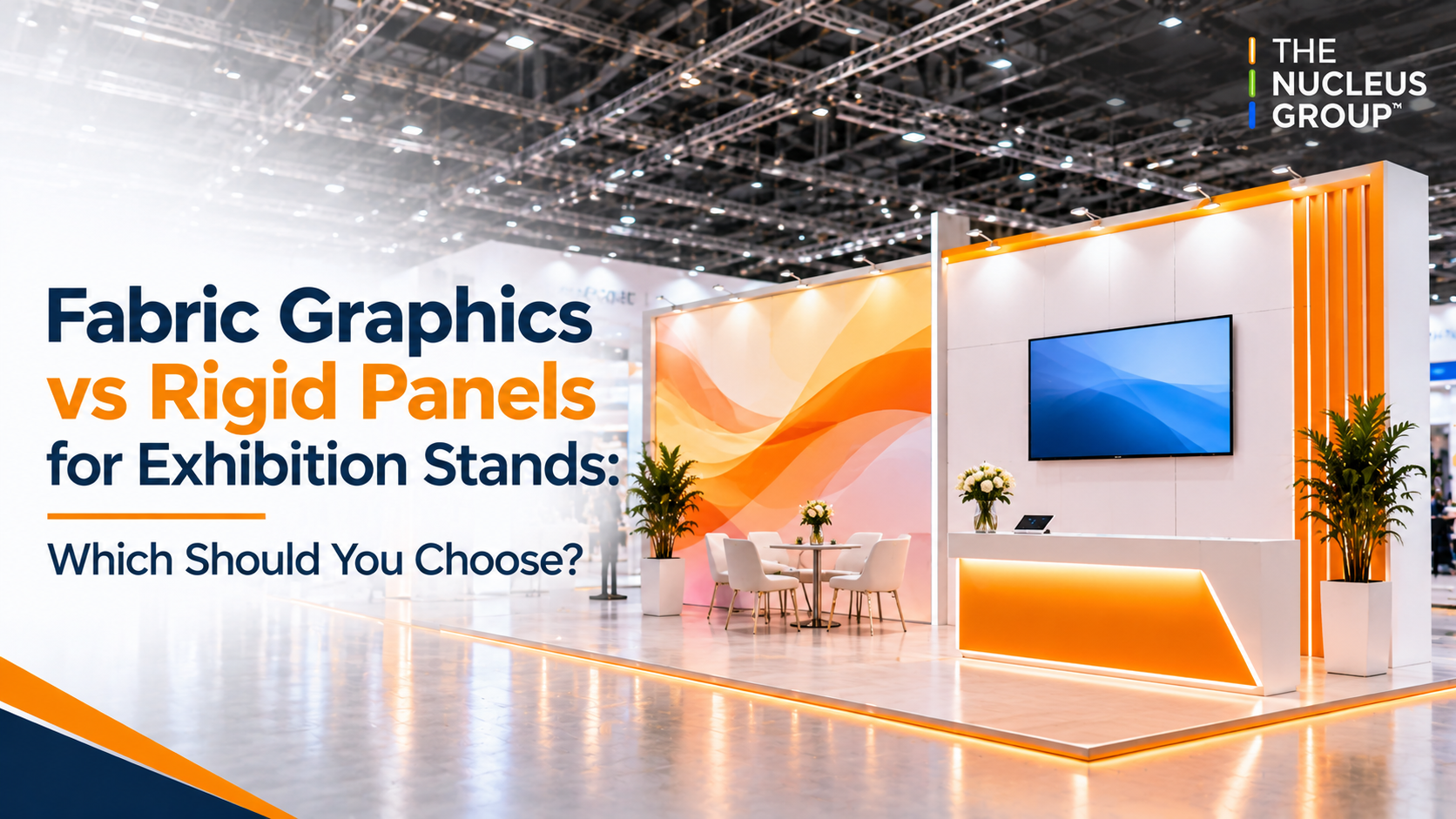
Fabric Graphics vs Rigid Panels for Exhibition Stands: Which Should You Choose?
Fabric Graphics vs Rigid Panels for Exhibition Stands: Which Should You Choose?
Quick Overview: Fabric Graphics vs Rigid Panels
Here is how the two materials compare on the points that matter most when you plan a stand.
What Are Fabric Graphics?
Fabric graphics are large prints on polyester fabric, usually made by dye sublimation, where heat bonds the ink into the fibres so colours stay rich and do not crack. The most common system for stands is silicone edge graphics, or SEG. A thin silicone strip is sewn around the edge of the print and pressed into a groove in an aluminium frame, which pulls the fabric tight and hides the frame behind it.
Common fabric uses on an exhibition stand include:
- Back walls and feature walls that need one continuous image across several metres.
- Lightboxes, where LED lighting behind the fabric makes the graphic glow.
- Hanging signs, which need to be light enough for rigging above the stand.
- Curved shapes and towers, since fabric follows a curved frame easily.
What Are Rigid Panels?
Rigid panels are solid boards with the graphic printed directly onto the surface or applied as printed vinyl. Typical materials include foam PVC board, aluminium composite panels, acrylic and painted or wrapped wooden panels built into the stand structure.
Rigid panels are the right choice where a surface has to do more than display an image. They can carry shelves and screens, take the knocks of a busy counter and hold mounted products. They also suit premium finishes such as 3D letters with backlighting, acrylic displays and logos with real depth.
When Fabric Graphics Are the Better Choice
You want one seamless image across a large wall
A single fabric print can cover a wide wall with no joins, which keeps faces, products and logos clean. A rigid wall of the same size usually needs several panels, and the joins can cut through key artwork.
You want the stand to glow
Backlit fabric is one of the strongest ways to stand out in a large hall. Light spreads evenly across the print, and the stand stays visible from across the aisle.
You exhibit at several shows a year
Fabric folds into small cases, which cuts freight and storage space. Prints can also be swapped between shows while the frames stay the same, so a new campaign does not mean a new structure.
When Rigid Panels Are the Better Choice
People will touch, lean on or look closely at the surface
Counters, demo areas and walls next to seating take constant contact. A rigid, wipeable surface stays neat for the whole show, where fabric could mark or pull.
The wall needs to carry weight
Shelves, screens and product displays need a solid wall behind them. Fabric frames are not built to hold this kind of load.
You need fine detail or dimension
Small technical text, certification marks and precise brand colours read best on a flat, hard surface. Raised logos, cut letters and layered acrylic also need a rigid base.
The Hybrid Approach: How Most Custom Stands Use Both
In practice, the choice is rarely one or the other. A well planned custom stand uses each material where it performs best. Here is a typical split.
The key is colour matching. Fabric and rigid materials take ink differently, so the same brand colour can look slightly different on each. Printing both under one roof, with proofs on each material, keeps the stand consistent. For more on choosing the right stand build overall, see our guide to custom exhibition booths vs modular stands.
Fire Safety and Venue Rules
Every material on a stand must meet the venue's fire safety rules, and fabric gets special attention. Informa, which organises several major Dubai shows, requires fabrics and decorative materials used for stand dressing to be fire resistant or treated. In practice, your builder should use certified fire retardant fabric and keep the certificate on hand during build up, as inspectors can ask for it.
Rigid materials also need to meet local rules, so confirm board types and treatments against your show's exhibitor manual before production.
Common Mistakes With Stand Graphics
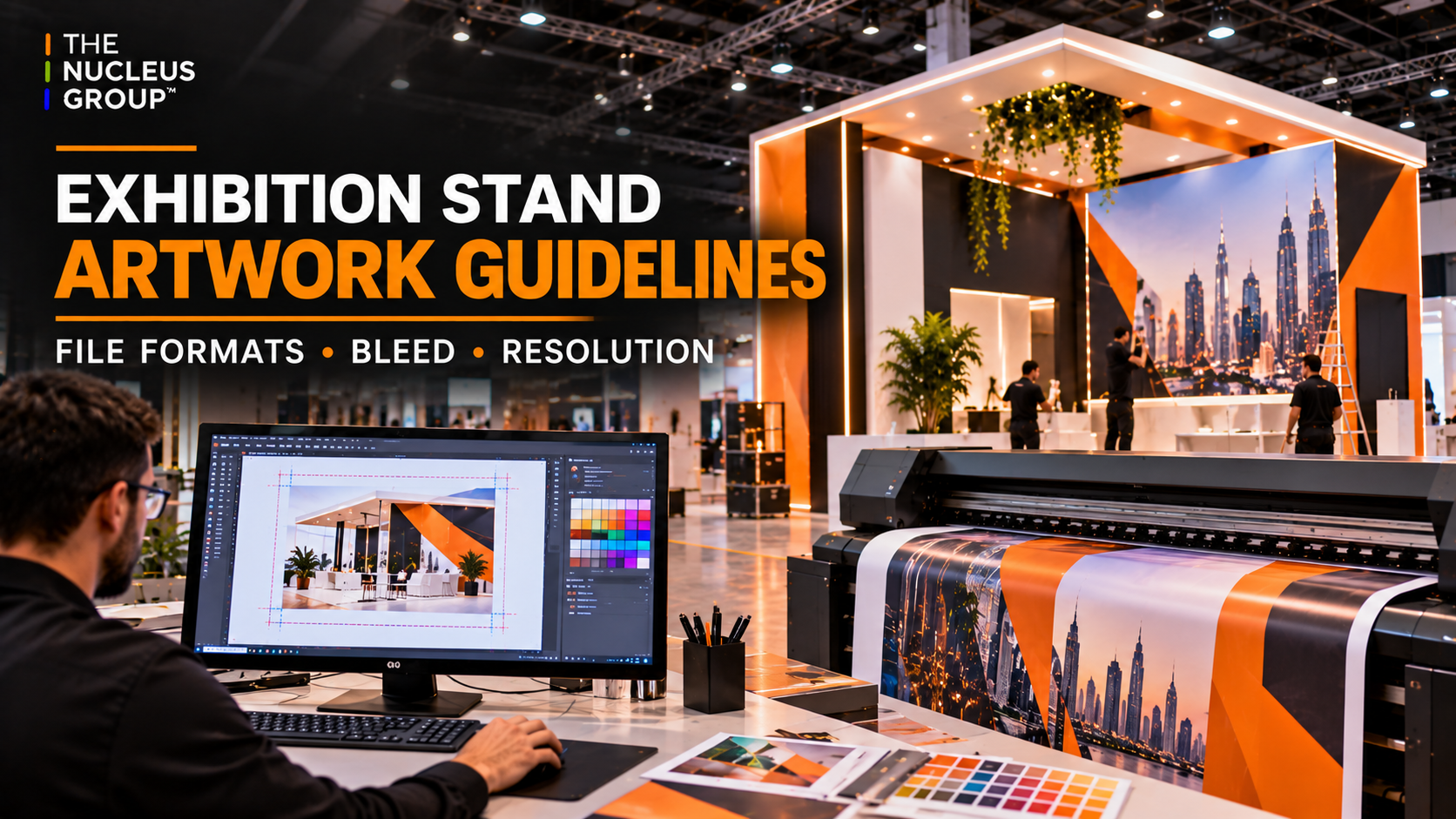
- Low resolution files. Large prints show every flaw; follow our exhibition stand artwork guidelines for file formats, bleed and resolution.
- Joins through key artwork. Plan panel or fabric seams so they never cut through faces, logos or headlines.
- Skipping colour proofs. Always proof brand colours on the actual material, especially when mixing fabric and rigid.
- Poor storage. Fabric stored creased or damp, and panels stacked without protection, both shorten their life.
Why Choose Nucleus for Your Stand Graphics
|
01 Printing in house Proton Advertising produces specialised fabric, large and small format prints and acrylic displays under one roof. |
02 Frames and structures too Our joinery and steel teams build the frames and walls the graphics sit on, so print and structure fit first time. |
03 20+ years of stands More than 6,000 projects delivered, with custom stand design and build at the core. |
Recent Projects
Get the Right Graphics for Your Next Stand
Tell us your stand size, show and the look you want, and we will recommend where fabric and rigid panels work best and quote for the full graphics package.
Sources
Frequently Asked Questions
Are fabric graphics cheaper than rigid panels?
Often, but not always. Fabric usually costs less to ship and store because it folds flat and weighs little, while rigid panels can be cheaper for small, simple pieces. Compare the full cost across every show you plan to attend, not just the print price.
What are SEG fabric graphics?
SEG stands for silicone edge graphics. The fabric print has a thin silicone strip sewn around its edge, which pushes into a groove in an aluminium frame and pulls the fabric tight for a smooth, frameless look.
Can fabric graphics be backlit?
Yes. Printed fabric in a lightbox frame with LED lighting behind it is one of the most effective ways to make a stand visible across a busy hall. The fabric and print must be chosen for backlighting so the light spreads evenly.
When should I choose rigid panels instead of fabric?
Choose rigid panels for surfaces people touch or view closely, for walls that carry shelves, screens or products, and for logos with real depth such as 3D letters. They also suit fine detail and text that must stay perfectly flat.
Do exhibition fabrics need a fire certificate in Dubai?
Organisers require stand fabrics to be fire retardant, and builders should keep the fire retardant certificate ready for inspection during build up. Check the exact wording in your show's exhibitor manual, as rules vary by venue and organiser.
Can Nucleus print both fabric and rigid graphics?
Yes. Proton Advertising, part of The Nucleus Group, produces specialised fabric, large and small format digital prints, acrylic displays and 3D letters with backlighting in house, so one team controls colour across every material on your stand.